The Studio.
0405 Architecture was created with a simple intention.
To build a practice where design is thoughtful, personal, and technically exacting.
Our name 0405 refers to a date, the 4th of May.
A significant date that marks a moment that profoundly altered our realities and re-shaped our future.
Our practice would not exist if it were not for this.
We are channelling the emotional attachment this has into our motivation to be architects of meaning, connection and craft.
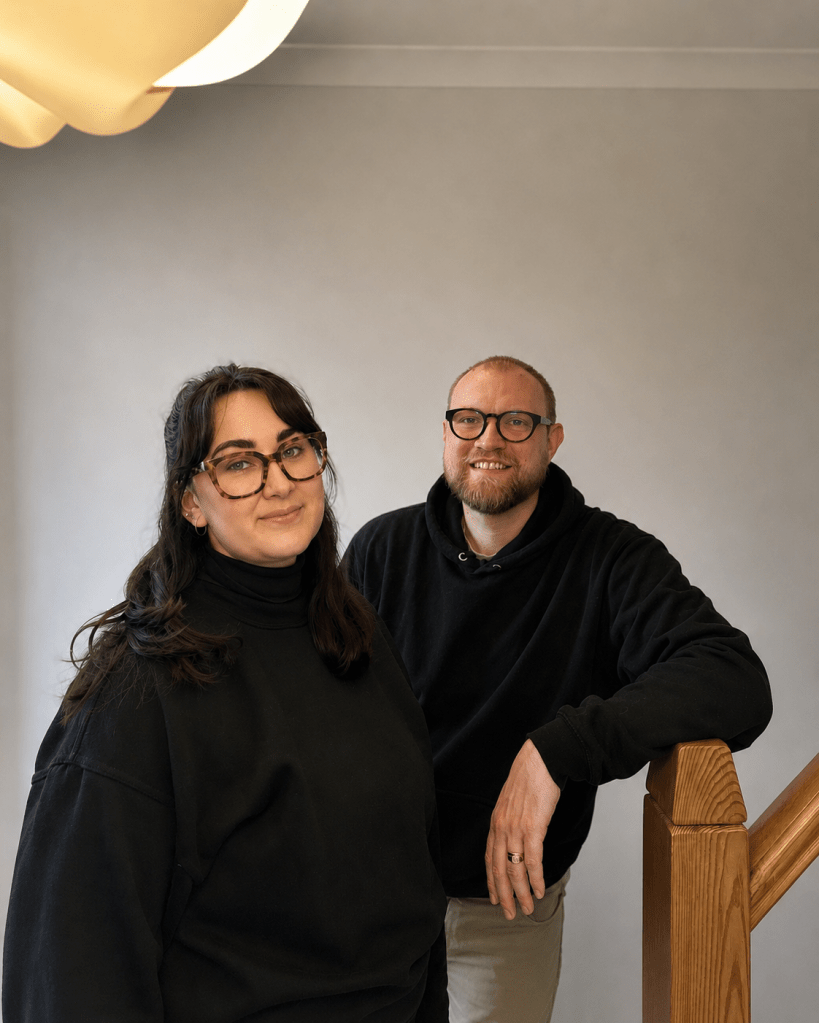
Charlie Doman-Lees
Managing Director, Chartered Architect
Charlie leads the studio’s design direction, shaping projects that combine calm, understated architecture with rigorous technical delivery. His experience spans private homes, developer-led housing, healthcare and community-focused buildings. He has picked up a number of awards across both academia and professional practice, most notably an award for collaborative practice and innovation. Charlie is also an RIBA Mentor, supporting students across the West Midlands to develop their practical and theoretical knowledge. In addition, Charlie enjoys writing and researching all this housing systems.
Jessica Doman-Lees
Operations Director
Jess oversees compliance, finance and operational governance — ensuring every project moves with precision and accountability. Her experience across regulated environments brings clarity, efficiency and a uniquely human intelligence to how the studio supports clients, consultants and contractors.
Our Values.
We keep things simple. Every drawing, process and conversation is clear, structured and purposeful.
We design with intent. No unnecessary gestures. No indulgence. Just architecture shaped by proportion, materiality and quiet confidence.
We care about the detail. Because the smallest decisions shape the entire experience.
We collaborate with purpose. We listen first. We design second. We build relationships that last.
We believe sustainability is clarity. Durable materials, efficient planning, long-life value. Sustainability is not a checkbox — it is a design philosophy.
Research + Development
We have embedded research into our practice, and it has become fundamental to how we design.
The housing sector faces significant challenges: affordability, quality, sustainability, planning complexity, changing demographics and increasing expectations of how our homes should perform over time. We believe these challenges cannot be solved through stylistic trends alone. They require a deeper understanding of how housing is conceived, designed and delivered.
Our research explores the principles that underpin successful housing. We study spatial efficiency, construction systems, planning policy, building regulations, neighbourhood design, environmental performance and the relationship between architecture and everyday life. Alongside practical project experience, this allows us to continually refine our thinking and apply evidence-based decisions throughout the design process.
Rather than treating every project as an isolated commission, we use each one as an opportunity to develop and test ideas that contribute to a wider body of knowledge. This ongoing process informs our design standards, technical detailing and project methodologies, enabling us to deliver housing that is robust, efficient and capable of adapting to future needs.
Our current research programme, Housing the Midlands, examines the unique opportunities and challenges facing residential development across the region. By combining practical experience with strategic research, we aim to contribute positively to discussions around housing quality, placemaking and long-term resilience.
For developers, landowners and homeowners, this commitment to research means working with a practice that is continually questioning, learning and improving. Every project benefits not only from technical expertise, but from an ongoing investment in understanding what makes housing perform better—for the people who live in it, the communities it serves and the generations that follow.
We see architecture not simply as the design of individual buildings, but as the continual refinement of the systems, knowledge and principles that shape better housing.
You can stay connected with our research by subscribing to be notified when we publish new articles, essays and papers.
 0405 Architecture